
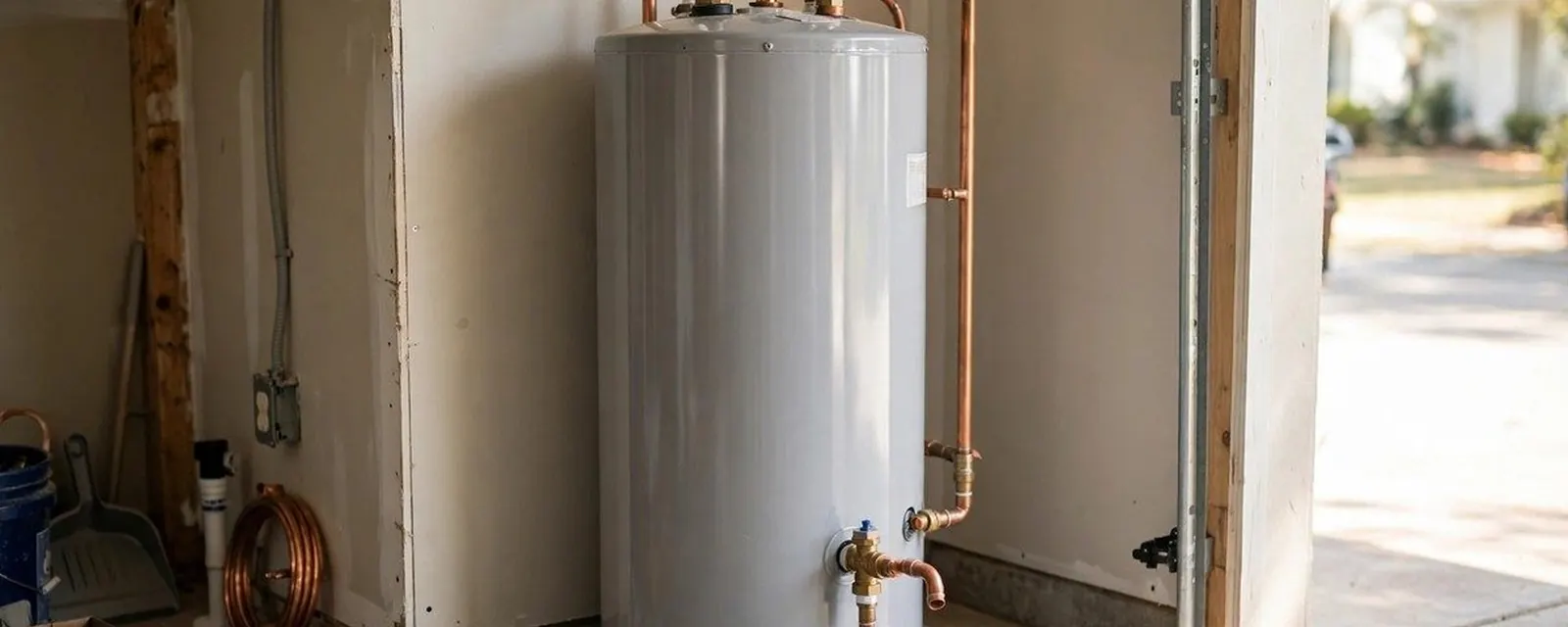
Sizing a water heater to your household
Size drives satisfaction. A heater that is too small runs out during a second shower, while one that is too large wastes energy keeping extra water hot. The first-hour rating on the unit's yellow label tells you how much hot water it delivers in the first hour, and that is the number to match against your peak demand.
A household of two or three often does well with a 40-gallon tank, and four or five people usually need 50 gallons or more. Count the simultaneous uses at your busiest hour, such as a shower, a dishwasher and a washing machine, and size to that.
Gas, electric, heat pump or tankless
Each type suits a different house.
- Gas tank: lower operating cost where gas is available, faster recovery, needs a vent.
- Electric tank: simple install, no vent, higher running cost.
- Heat pump: uses far less electricity, needs space, airflow and a condensate drain.
- Tankless: saves floor space and heats on demand, see tankless water heater service.
If the existing unit has failed and you need it fast, water heater replacement covers the emergency path.
What a proper installation includes
We install a shutoff valve on the cold line, flexible connectors, a temperature and pressure relief valve with a discharge line, and a drain pan where leaks would damage a floor. Gas units get a sealed gas connection and a vent that drafts properly. Electric units get a correctly sized circuit.
Many Leawood homes also benefit from an expansion tank, since a closed water system gives heated water nowhere to go. Permit and inspection rules vary, so ask the Leawood building department what applies to your project.
Leawood water and your new heater
WaterOne supplies Leawood and has published a hardness goal of 120 to 140 mg/L, right at the line between moderately hard and hard. That is an older figure, so check WaterOne's current annual report. Scale forms at that level, so plan a yearly flush and inspect the anode rod every few years. We can set up the heater with a drain valve placed for easy flushing.
What installation costs: the factors
You get a clear price before work starts. It moves with:
- Unit type, size and warranty.
- Whether vent, gas line, electrical or water connections change.
- Access and the distance from the old unit.
- Removal of the old tank.
- Any code upgrades the inspection requires.
Planned work costs less to arrange than an emergency, since you can compare models. Call (855) 575-2890 to talk through your options.
Gas safety checks after any installation
A gas water heater needs three checks before you rely on it. A leak test on the gas connection, usually done with a soap solution or an electronic detector, confirms the joint is tight. A draft check at the vent confirms exhaust leaves the house. A carbon monoxide detector near the sleeping area gives you a second layer of protection. Ask the installer to show you each check, and replace your detector's batteries when the heater goes in.
Standards that apply to a tank installation
Gas storage water heaters are built to ANSI Z21.10.1, and every tank carries a temperature and pressure relief valve as a safety device. That valve needs a discharge pipe that ends where escaping hot water cannot hurt anyone. Ask the installer to show you the valve and the pipe. Local rules on permits, venting and drain pans vary by city, so ask the Leawood building department what applies to your job.
Water heater installation questions
Appointments are available when the schedule allows, including same-day. The 24/7 line is open if you need to ask.
Not always. A standard tank usually works with the existing line. Tankless units draw more gas and often need a larger line, which we check before quoting.
Usually the tank for a set number of years and parts for a shorter period, and only when installed correctly. Registering the unit and keeping the receipt matters.
Often yes, since it needs air volume and a drain, and it cools the space slightly. A closet with no airflow is a poor fit.
Look at space, budget and household demand. Tankless saves space and never runs out for a single use, while a tank costs less to install.
Yes.