
When a clogged drain is an emergency
One slow sink can wait until morning. A toilet that will not flush, a tub that fills with gray water when the washer drains, or sewage showing at a basement floor drain cannot. Those signs mean the blockage is deep, and every flush or load of laundry pushes more water toward the lowest opening in the house.
If that is your situation, stop using water, move valuables off the floor and call. We handle drain emergencies at night and on weekends, and same-day appointments are available when the schedule allows.
How we clear a drain: snaking first, then stronger tools
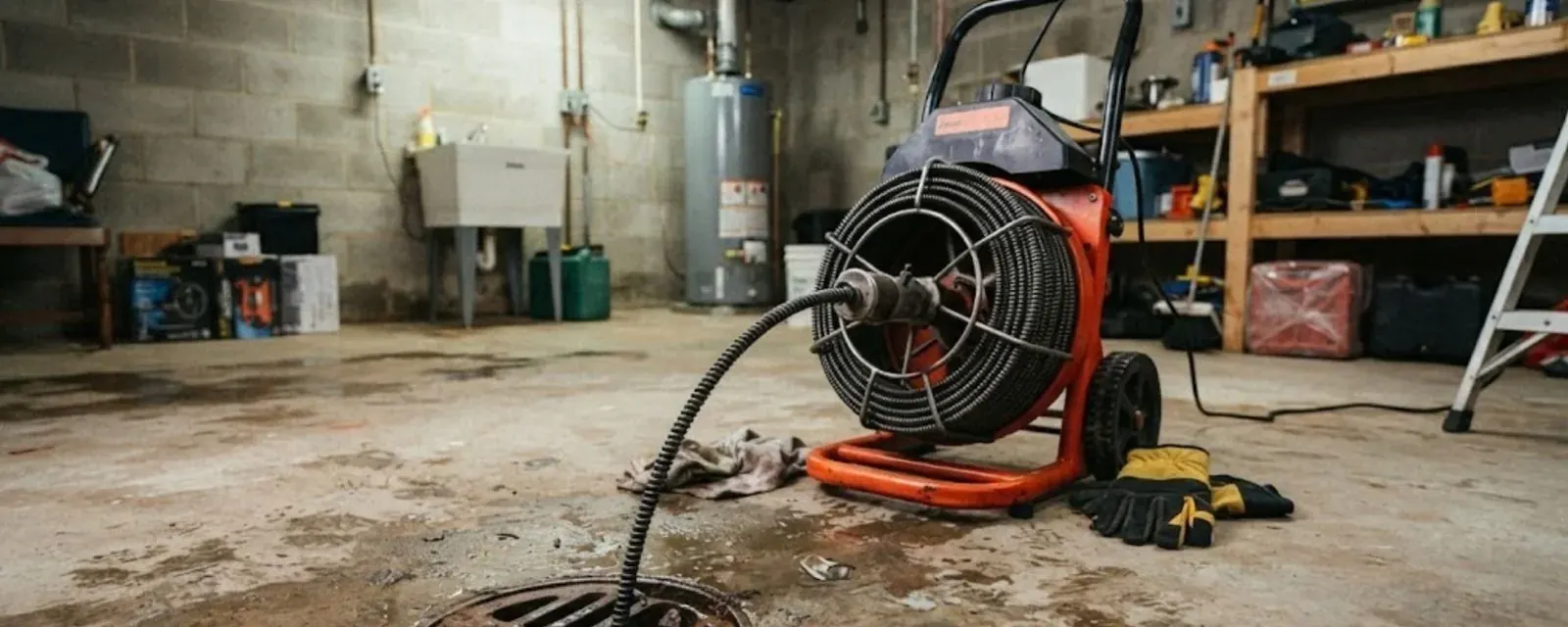
Most household clogs sit in the first 25 to 40 feet of pipe, where hair, soap scum, grease and paper collect at a bend or a trap. A hand auger or a motorized drain snake with a cutting head breaks that mass loose and pulls it out. For a bathroom sink or tub, the job is often finished in one visit.
When the snake keeps hitting the same spot or the water drains slowly again within days, the cause is usually not a clog at all. It may be a belly in the pipe that holds water, a root intrusion or a cracked joint. In that case we step up to hydro jetting or a camera inspection so the repair matches what is really down there.
Which symptom points to which fix
| Symptom | Likely location | First move |
|---|---|---|
| One sink or tub drains slowly | Trap or branch line for that fixture | Snake that fixture, remove the stopper and clean it |
| Toilet and tub back up together | Main drain or sewer service line | Stop water use and call, see sewer line cleaning |
| Kitchen sink and dishwasher back up | Kitchen branch line, often grease | Snake the branch, then flush with hot water |
| Basement floor drain gurgles after rain | Main line or stormwater in the sewer | Call, and ask about a sump pump check |
| Gurgling plus a sewer smell | Vent or main line restriction | Camera inspection before more snaking |
Why drains clog in Leawood homes
Leawood homes come from several eras, and pipe material changes what clogs look like. Older cast iron drains develop rough, scaled interiors that catch grease and paper. Newer PVC stays smooth but still collects hair and soap at bends. Mature trees in established neighborhoods send roots toward the moisture inside old clay pipe or cracked joints.
The practical point is simple: a clog that returns every few months in the same fixture is telling you something about the pipe. Pay for the camera look once rather than the snake call five times. Please keep chemical drain openers out of the pipes, since Johnson County's Environmental Division handles household chemical disposal and those products can damage old pipe.
What drain cleaning costs: the factors that set the price
We give a clear price before work starts. These are the factors that move it:
- How deep the clog sits and how much cable the job takes.
- Which fixture is involved, since a toilet needs pulling while a sink does not.
- Whether a cleanout is accessible or the line must be opened at a fixture.
- Whether the call is for an after-hours emergency or a scheduled visit.
- Whether a camera inspection is needed to find the real cause.
Homeowners insurance usually does not pay to clear a clog, though it may respond to water damage from a sudden backup. Check your policy, and ask us for a written description of the work if you file a claim. Want your real number? Call (855) 575-2890 and tell us what the drain is doing.
Safety steps around clogs
Do not mix chemical drain cleaners, and never use them before a plumber visit, since the liquid can burn skin and damage pipe. Wear gloves and eye protection near a trap, and keep children and pets away. If water is backing up from the lowest drain in the house, stop using water and call. Plumbing codes such as the International Plumbing Code (IPC) require traps and vents that a clog can reveal.
- Stop running water when a drain backs up.
- Keep chemical cleaners away from pipes a plumber will open.
- Wash your hands after touching drain water.
- Call right away if sewage reaches the floor.
Questions about drain cleaning in Leawood
Yes. The 24/7 line takes drain emergencies at any hour, including holidays. Tell us which fixtures are backing up and whether water is reaching the floor. We book same-day appointments when the schedule allows and give a clear price before work starts.
We recommend against it. Chemical openers rarely clear a deep blockage, and they can leave caustic water standing in the pipe, which is unsafe for the plumber and hard on older metal drains. A plunger and patience are safer until we arrive.
Run a faucet on a different level of the house. If only one fixture is slow, the clog is in its own branch. If the lowest toilet or floor drain gurgles when you flush upstairs or run the washer, the blockage is in the main line, which needs sewer line cleaning.
A repeat clog usually points to something the snake cannot fix, such as a sagging section, grease lining the pipe, or roots. A camera inspection shows the pipe, and hydro jetting cleans the walls instead of poking a hole through the blockage.
No. Cleaning removes what is blocking the pipe, while sewer line repair fixes a pipe that is cracked, collapsed or offset. Cleaning is usually the first step, and the camera tells us whether repair is also needed.
Johnson County Wastewater says homeowners maintain, repair and replace the private service line from the house to the public sewer main. Call us first, and if the blockage is in the public main, we will tell you who to contact.