
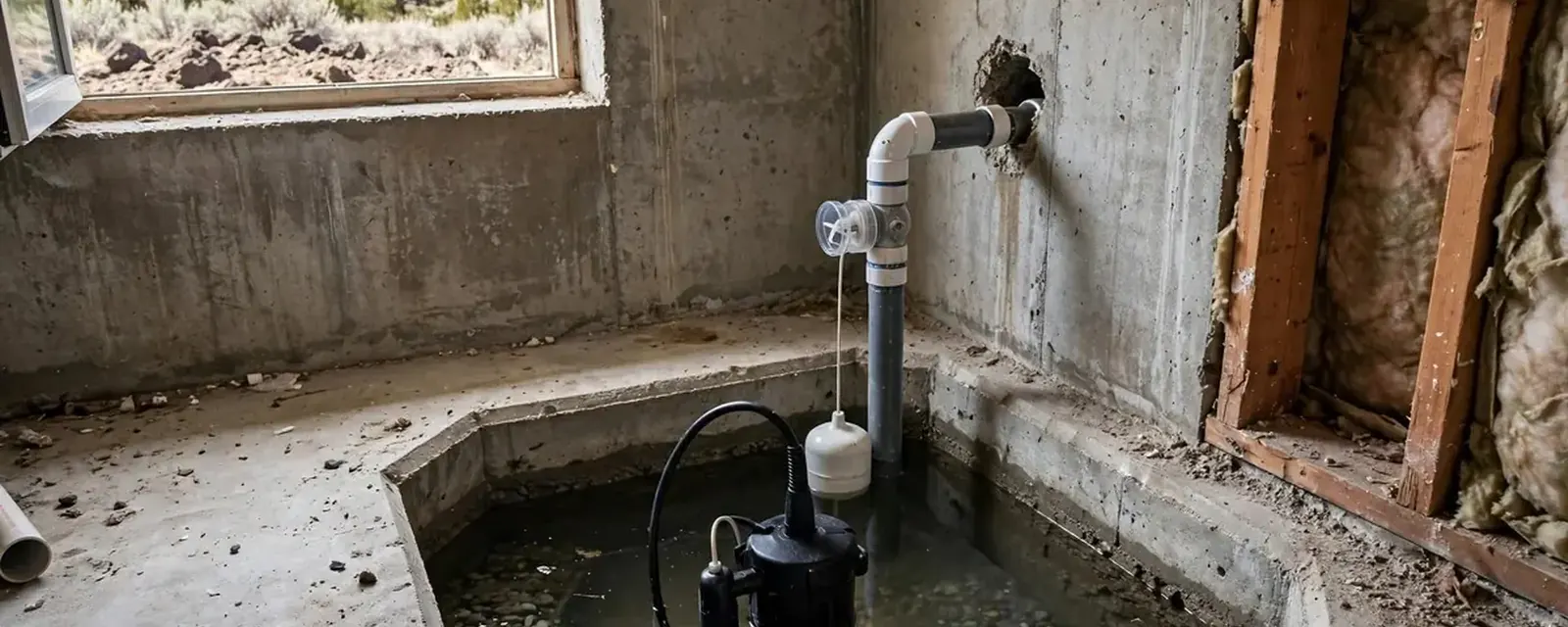
A twice-a-year checklist
- Check that the pump is plugged in and that the outlet works.
- Pour a bucket of water into the pit and watch the float rise.
- Confirm the pump starts, empties the pit and shuts off.
- Listen for rattling, grinding or a pump that runs after the water is gone.
- Clear debris from the pit and the intake screen.
- Check the discharge pipe outside for blockage and a clear outlet.
- Test the battery backup, if you have one, and replace old batteries.
Do the test in spring and again before fall rain. A pump that fails the test is cheaper to fix on a dry day than in a storm.
Why pumps fail
Most failures fall into a few buckets. A float switch can jam against the pit wall or get tangled. Motors wear out, often after 7 to 10 years. Debris such as gravel or silt clogs the impeller. A failed check valve lets water run back into the pit and makes the pump short-cycle. Power outages stop a pump with no backup.
A pump that runs nonstop may be undersized, sitting in a pit that fills too fast, or have a stuck float. A pump that never runs may have a dead switch, a tripped breaker or a seized motor.
Table: symptoms and what they mean
| Symptom | Likely cause | First move |
|---|---|---|
| Does not start | Unplugged, tripped breaker or stuck float | Check power, free the float |
| Runs but moves no water | Clogged intake or failed impeller | Clean the screen, pump replacement |
| Short cycles | Failed check valve | Replace valve |
| Runs constantly | Float stuck or undersized pump | Free the float, review sizing |
| Loud noise | Worn bearings or debris | Inspect, replace |
Battery and water-powered backups
A battery backup takes over when the main pump fails or the power goes out. Storms that bring rain often bring outages, and a single pump is exposed during exactly that. Test the battery and check the charger. A water-powered backup uses municipal water pressure and needs no battery, though it uses water while it runs.
If the pit is also small, consider a larger pit or a second pump. Our sump pump page covers repair and installation, and basement waterproofing addresses the source of the water.
Where the discharge goes
Discharge must go outdoors, away from the foundation, to a place where water can drain without flooding a neighbor. Directing it near the foundation lets water cycle back to the pit. A discharge line that freezes can also stop the pump from emptying, so check that it can drain.
Signs of a pump that is about to fail
Pumps rarely fail without warning. A pump that runs longer than it used to, cycles more often, makes new noises or vibrates is telling you something. Rust on the housing, a float that sticks, or discharge water that runs weakly all suggest wear. A pump that is more than seven years old is worth replacing before the wet season.
Keep a record of the date of installation and the date of each test. If the pump struggles, replace it on a dry day. A new pump costs far less than a flooded basement.
What to do when the pit overflows anyway
Even a good pump can be overwhelmed in an extreme storm. If water is rising, move belongings off the floor, switch off power to anything the water could reach and keep out of a flooded basement with live electrical equipment. Call a plumber, and photograph the damage for insurance. The 24/7 line is open, and we can talk through what to do while we get to you.
Choosing a replacement pump
If you do replace a pump, match it to the pit and the job. Submersible pumps sit in the pit, run quietly and handle most homes. Pedestal pumps sit above the pit and are easier to service, though they are louder. Pay attention to the horsepower, the discharge height and the float type. A vertical float suits a narrow pit, while a tethered float needs more room.
Ask the installer to include a new check valve and a clean discharge connection. Those small parts decide whether the pump short cycles. Keep the manual and the model number with your records, since you will need them for warranty claims.
What the utility guidelines say
According to Johnson County Wastewater, a sump pump may not discharge to the sanitary sewer. Treat that as the basic guideline for where your discharge pipe ends.
Local note: sump pumps and the sanitary sewer
Johnson County Wastewater states that connecting a sump pump discharge to the sanitary sewer is against code, since it can cause backups in your basement or a neighbor's. The utility also runs a voluntary program called JoCo Inflow, which evaluates sump pumps, downspouts, area drains and uncapped cleanouts for stormwater getting into the sanitary system. It says more than 55,000 properties have been inspected and about 17,000 sources removed, and that it pays for approved repairs.
If your pump discharges to a floor drain or a sanitary line, rerouting it is the fix. Residents of Prairie Village and Mission Hills, where many homes have basements, are in the same county utility area.
Questions about sump pump maintenance in Leawood
Many last 7 to 10 years. Replace sooner if it fails tests or cycles often.
No. Johnson County Wastewater says it is against code, and it can cause backups.
The utility describes it as a voluntary program that pays for approved repairs. Ask it for details.
A battery or water-powered backup keeps the pit emptying. Without one, the pit fills.
Yes. The line is open, and we book same-day appointments when the schedule allows.