
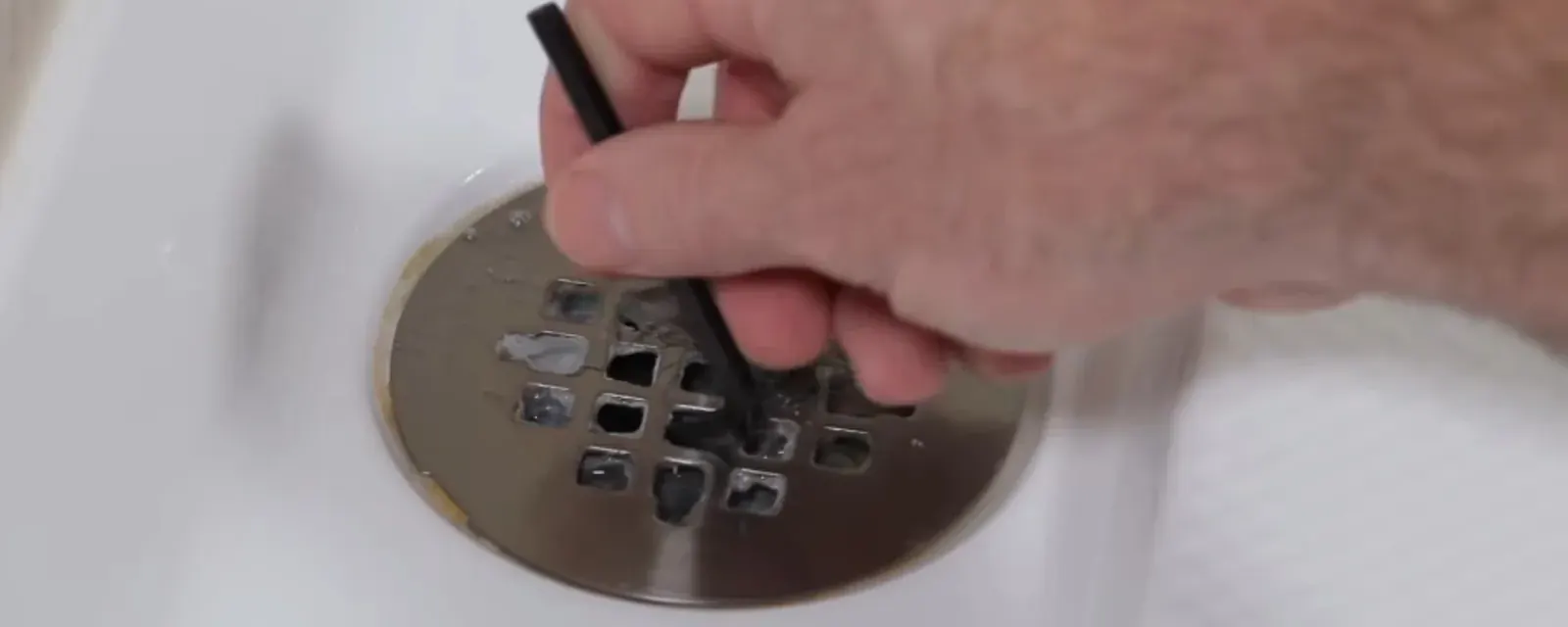
Start with the obvious: the stopper and the strainer
Pull the stopper and look. Most tub stoppers collect a mat of hair and soap that never reaches the drain pipe. A lift-and-turn or push-pull stopper unscrews. A pop-up lever stopper hides its linkage in the overflow plate. Clean both, and run hot water.
If it still drains slowly, test it with a plunger. Block the overflow with a wet rag, add a few inches of water and plunge. That clears most soft blockages in the trap just below the drain.
Soap scum and mineral buildup
Soap does not rinse away completely. It combines with minerals in the water and forms a waxy layer on the pipe wall. Over months, that layer narrows the pipe and catches hair. The result is a drain that is not clogged and still slow.
WaterOne, the utility that supplies Leawood, says softeners may reduce soap and detergent use, which is relevant to scum. A hot water flush and a drain snake or a plastic drain-cleaning strip remove the buildup. Enzyme cleaners can help with maintenance, though they will not clear a heavy blockage.
A partly blocked branch line
The tub's drain joins other fixtures before it reaches the main line. If a shared branch has partial buildup, every fixture on it is slow, and one clearing of the tub does not help. Check the sink and toilet on the same floor. If they are slow too, the branch is the issue, and a drain cleaning visit with a cable reaches it.
If the slowness keeps returning, the pipe may be sagging or the cause may sit farther down. Hydro jetting removes scale and grease from the pipe wall, and a camera inspection shows the real condition.
Vent trouble and gurgling
- Gurgling when the tub drains points to a vent problem.
- A slow drain that improves when another fixture runs suggests air is the issue.
- A bubble that rises in the toilet when the tub drains points to a shared line problem.
- A sewer smell with slow drainage suggests a dry trap or a vent issue.
A blocked vent slows a drain because air cannot enter behind the water. A plumber can camera the line to confirm.
What not to do
Avoid caustic chemical openers. They rarely clear a deep blockage, they sit in standing water and they damage some pipes. They also create a hazard for the plumber who comes next. A plunger and a drain strip are safer first tools.
A simple homemade test for the cause
Run the tub's water and note how it drains. If it starts quickly then slows, a partial blockage deeper in the line is likely. If it drains slowly from the start, the trap or the stopper area is the culprit. Next, run the bathroom sink at the same time. If the tub gets slower, the two share a branch line.
Then fill the tub a few inches and pull the stopper. A healthy drain makes a smooth swirl. A drain that gulps and burps points to a venting issue. The pattern tells you what to try next, and it gives a plumber something specific to work from.
Preventing the slow drain from coming back
A hair catcher in the tub is the best single habit. Pull it out and empty it before it fills. Once a month, flush the drain with very hot tap water and a squirt of dish soap. Avoid pouring oils or bath products that leave a film. If the tub is slow again within weeks, the problem is deeper than hair, and a camera look is worth it.
Why a tub drains slowly even when nothing is stuck
A tub drain is often one of the longest, flattest runs in a house. A pipe with too little slope lets water crawl, and soap film narrows it over the years. The trap under the tub may hold a ring of residue that never fully blocks the flow, though it slows it.
Venting matters too. When the vent is partly blocked, air cannot enter behind the draining water, so the water pulls against a vacuum and drains slowly. That can look exactly like a clog, but a cable will not fix it. The signal is gurgling from other fixtures when the tub drains.
When to call a plumber
If hot water and a hair catcher do not help, a plumber can run a camera down the line to see the cause. Call sooner if the slowness spreads to the sink or toilet, if you smell sewer gas, or if water backs up in a floor drain. Those signs point to a main line problem, and the drain cleaning page explains what we do.
Why codes require vents
Model codes such as the International Plumbing Code (IPC) require each trap to be vented. A slow drain with gurgling often means that vent path is partly blocked.
Local note: internal clogs and what to call
Johnson County Wastewater says that a backup in a drain that is not on the lowest level of your home is due to an internal clog, which is the homeowner's to fix. If your tub is upstairs and slow, expect an issue inside the house. If your lowest drain backs up too, the main line is the suspect, and the utility has a 24/7 line for the public main.
It also directs residents to the county's Environmental Division for chemical disposal, so keep chemical cleaners out. For homes in Mission Hills and Overland Park, the same guidance applies.
Questions about a slow tub in Leawood
The blockage is deeper in the trap or the branch line. A plunger or a cable clears it.
It adds scale and soap scum, which narrow the pipe over time.
Not by itself. If it is rising with other drains backing up, call the 24/7 line.
It is safe, and it helps with odor. It rarely clears a heavy blockage.
When it keeps returning after cleaning, or when several fixtures are slow.