
Signs your pipes are due
Pipes give warnings before they fail. Look for rusty or brown water when you run a tap after a day, low pressure that is worse than it used to be, repeated pinhole leaks in different places, green or white crust on fittings, and a metallic taste. One leak is a repair, while several in a year point to a system in decline.
Galvanized steel, common in older homes, rusts from the inside and narrows over time. Polybutylene, used in some homes from the late 1970s into the 1990s, has a history of failures. Old copper can fail at the joints.
Repair, or repipe the house
| Situation | Usual answer |
|---|---|
| One leak in an otherwise sound system | Repair |
| Repeated leaks in different spots | Repipe, at least a section |
| Galvanized with low pressure and rust | Repipe |
| Polybutylene supply lines | Repipe |
| Pinholes in copper from corrosion | Section repipe or whole house |
If a pipe has just burst, see burst pipe repair for the urgent step. We can repair first and plan the larger job.
Copper or PEX
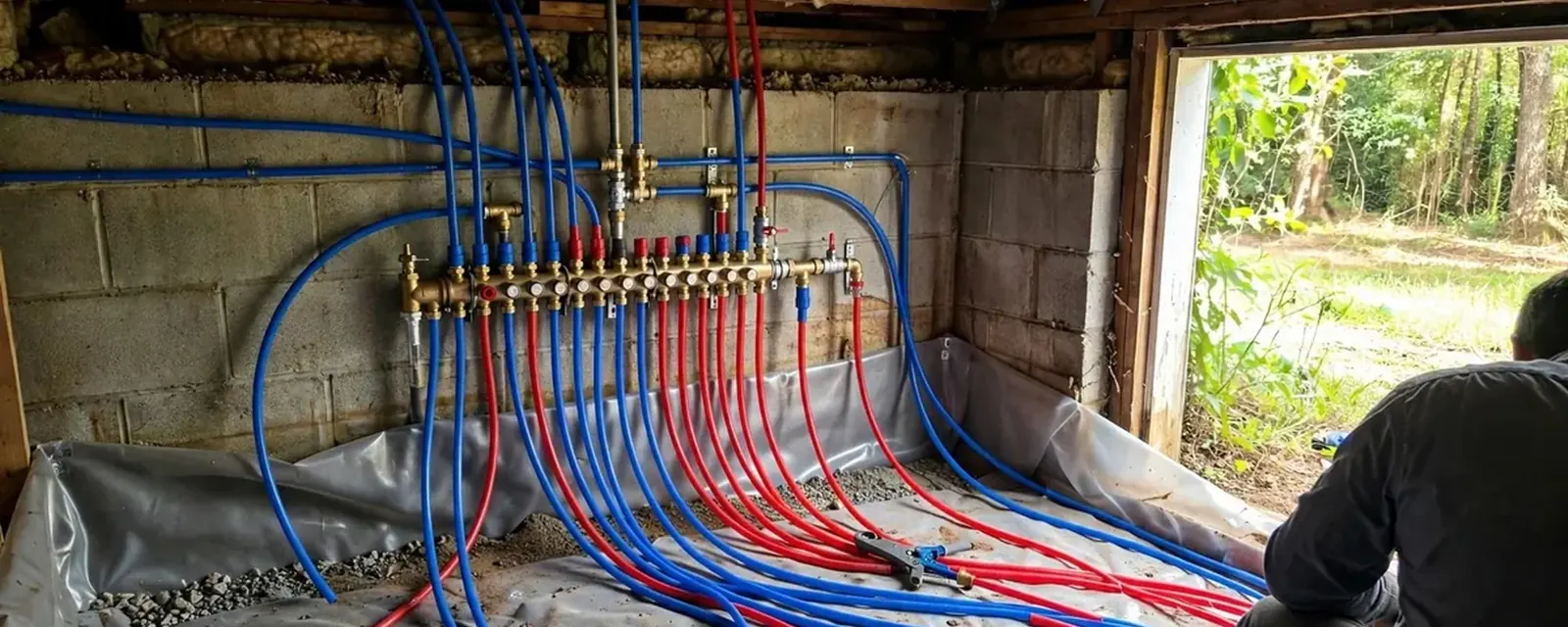
Copper is durable and has a long record, though it costs more and can corrode in certain water. PEX is flexible, goes in faster and handles freezing better than rigid pipe. Either can last for decades in a well-installed system, and we explain which suits your house.
Water conditions matter. WaterOne states it has no record of lead utility service lines in its system, so a repipe is about the pipes inside your house. WaterOne has published a hardness goal of 120 to 140 mg/L, an older figure worth checking against its current report, and hard water deposits on pipe interiors over many years.
How a repipe works
We map the new routes, shut off the water and cut access holes in drywall. New lines replace the old, and each fixture is reconnected. We pressure-test the system before closing walls, and drywall patches are left ready for a finisher. A whole-house repipe often takes a few days, though a section is quicker. We discuss the schedule before work.
Permit and inspection rules vary, so ask the Leawood building department about requirements. Before we start, we also look at the water service line since it feeds the whole system.
What repiping costs: the factors
You get a clear price before work starts. It moves with:
- Size of the house and number of fixtures.
- Pipe material.
- Wall and ceiling access.
- Patch and finish work.
- Whether a failed pipe is forcing the timing.
Call (855) 575-2890 for a clear price.
Protecting the house during a repipe
Repiping means opening walls, and the first question is how much. We try to keep openings small, using the attic, basement and crawl space for horizontal runs and cutting only where a pipe drops to a fixture. Floors and furniture are covered, dust is controlled, and openings are kept as small as the work allows.
After the new lines are in and tested, drywall patches are made ready for a finisher. Most people bring in a drywall or paint contractor, and we can tell you how much finish work to expect so you can plan for it.
Fixing pressure and water quality problems at the same time
Low pressure after a repipe is a surprise nobody wants. Before we start, we measure static and flowing pressure at a hose bib. If the pressure is high, a regulator protects the new pipe and every fixture, and if it is low, we trace the cause, which may be the regulator, the service line or the old pipe itself.
A repipe is also the natural moment to replace aging shutoff valves, add a main shutoff that works smoothly and put isolation valves on each bathroom so a future repair does not shut off the whole house.
Pipe standards worth asking about
Copper tube for plumbing is made to ASTM B88, and PEX is made to ASTM F876. Ask the installer which standard the pipe meets and where the fittings are rated. The International Plumbing Code (IPC) is the model code many cities adopt, but the edition and local changes differ, so ask the Leawood building department what applies and whether your repipe needs a permit and inspection.
Repiping questions
If a pipe fails at night, the 24/7 line is open and we stop the damage first. We book same-day appointments when the schedule allows.
Scratch a pipe with a key. Gray and magnetic suggests galvanized steel, while copper looks orange and PEX is plastic.
Copper and PEX can last decades when installed correctly.
Often, if corroded pipe is the cause. A failing regulator or the service line can also be responsible, and we test first.
Rules vary, so ask the Leawood building department.
Sometimes. Water is off during work, and we plan around that.