
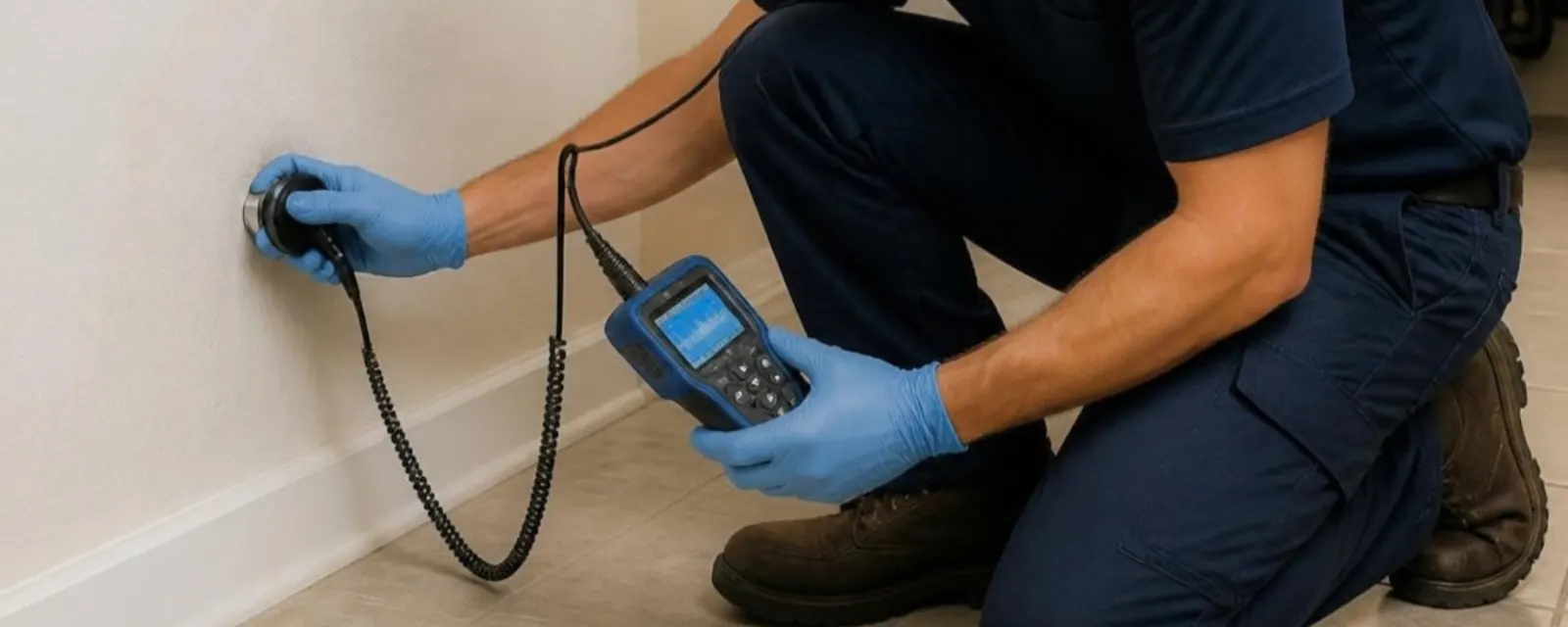
How acoustic detection works
Water under pressure makes noise as it escapes through a hole. That sound travels through the pipe and through the surrounding material. A ground microphone on a slab or a contact microphone on a pipe picks it up, and a filter helps remove background noise.
The technician moves along the suspected line and compares the volume at each point. The loudest spot is where the leak is. Experience separates a leak from a pump hum or a running appliance, which is why the technician's judgment matters as much as the gear.
What the equipment includes
- Ground microphones for slab and yard work.
- Contact sensors for pipes and valves.
- Electronic amplifiers and headphones that filter noise.
- Thermal cameras for hot-water leaks behind surfaces.
- Pressure gauges and test plugs to isolate sections.
- Tracer gas in some cases, where sound is not enough.
No single tool does it all. The best results come from combining them, and from a meter test first, to confirm a leak exists before anyone listens.
What acoustic detection can miss
Plastic pipe carries sound poorly, which can make PEX and PVC leaks harder to hear. Low-pressure leaks, deep leaks and leaks under heavy concrete are quieter. Background noise from traffic, pumps and appliances can mask the sound.
That is why we shut off fixtures and run the test at quiet times, and why we confirm with a pressure test. If the sound is uncertain, we say so, and we tell you what the next step is.
The meter test first
- Shut off every fixture and appliance in the house.
- Look at the water meter, usually in a box near the street.
- A moving low-flow indicator or dial means water is escaping somewhere.
- Close the main valve at the house and check again.
- If the meter stops, the leak is inside the house, and if it keeps moving, it is in the line to the meter.
Cases where acoustic detection shines
Slab leaks under a house, leaks in the water service line in the yard, and leaks inside walls are the main uses. See water service line repair for the buried pipe, and burst pipe repair once the leak is found. A slow leak found early costs far less than one that has soaked a subfloor.
What happens after the leak is found
Once the spot is marked, the repair choices depend on the pipe and its location. A leak in a wall is repaired through a small opening, with a new section of pipe joined to the old.
A leak under a slab may be repaired by breaking a small hole in the concrete, or the line may be rerouted through the attic or walls to avoid the slab entirely. A leak in a yard line is dug up and repaired at the spot.
We explain the choices and the cost before work begins. The goal of detection is a small, informed repair, and it only works when the plan follows from the findings.
Choosing a detection service
Look for a service that explains its method, tests before it digs and gives you a clear price. Ask whether they will confirm the leak with a pressure test and whether they will mark the location for you to see. A company that wants to open the floor before it has located the leak is not doing detection.
Signs that point to a hidden leak first
Detection starts with clues you can check yourself. A water meter that moves when every fixture is off is the strongest sign. Others include warm spots on a floor, the sound of running water in a quiet house, damp baseboards, peeling paint, a musty smell and a bill that climbs with no change in habits.
Write down what you notice and when. If the warm spot is near the water heater line, a hot supply pipe is the likely source. If the damp patch is near an outside wall, the service line deserves a look. Those notes shorten the search and lower the cost.
Limits of the method
Sound-based detection works best on pressurized pipe and in quiet conditions. Heavy traffic, running appliances and plastic pipe can muffle the signal, and a very small seep may not make enough noise. In those cases a technician may combine methods, such as a pressure test on isolated sections, a thermal camera for hot lines or a tracer gas. No single tool finds everything, and a good technician says so.
Why leak finding is worth doing
According to the EPA, household leaks can waste nearly 10,000 gallons a year. Finding the exact spot keeps the repair small, which is the goal of the guidelines above.
Local note: the line from the meter and who fixes it
WaterOne, which serves Leawood, states that the customer-owned section of the water service line is the customer's responsibility to repair, replace or maintain. If the meter keeps moving with the house shut off, the leak is likely on that stretch, and acoustic detection is the cleanest way to find it before digging. Call Kansas One Call at 811 before any excavation so buried utilities are marked.
Homes in Overland Park and Mission Hills sit on the same WaterOne system, so the same ownership rule applies there.
Questions about acoustic leak detection in Leawood
It can, though plastic carries sound poorly, so we pair it with other methods.
Detection narrows the spot, so only a small area is opened.
We need pressure. We pressurize the line to listen.
In good conditions, within a few feet. Pressure testing confirms it.
If water is visible or the meter is spinning, call soon. The 24/7 line is open, and we book same-day appointments when the schedule allows.